

Table of Contents
ToggleIntroduction: The Tech War That Never Ends
Apple Vs Samsung, In the world of smartphones and smart devices, Apple and Samsung stand as two titans of innovation. For more than a decade, these brands have been battling for global dominance, with American consumers often at the center of the rivalry. But as we head into mid-2025, the competition has become more intense than ever.
With the iPhone 17 and Galaxy S25 Ultra taking the headlines, new chipsets, AI integration, and even foldable technology entering mainstream use, the question remains: Which brand is leading the tech wars in 2025? In this article, we’ll break down the latest moves from both companies and help you understand who’s winning—and why.
1. Flagship Phones: iPhone 17 Pro vs Galaxy S25 Ultra
Design & Build
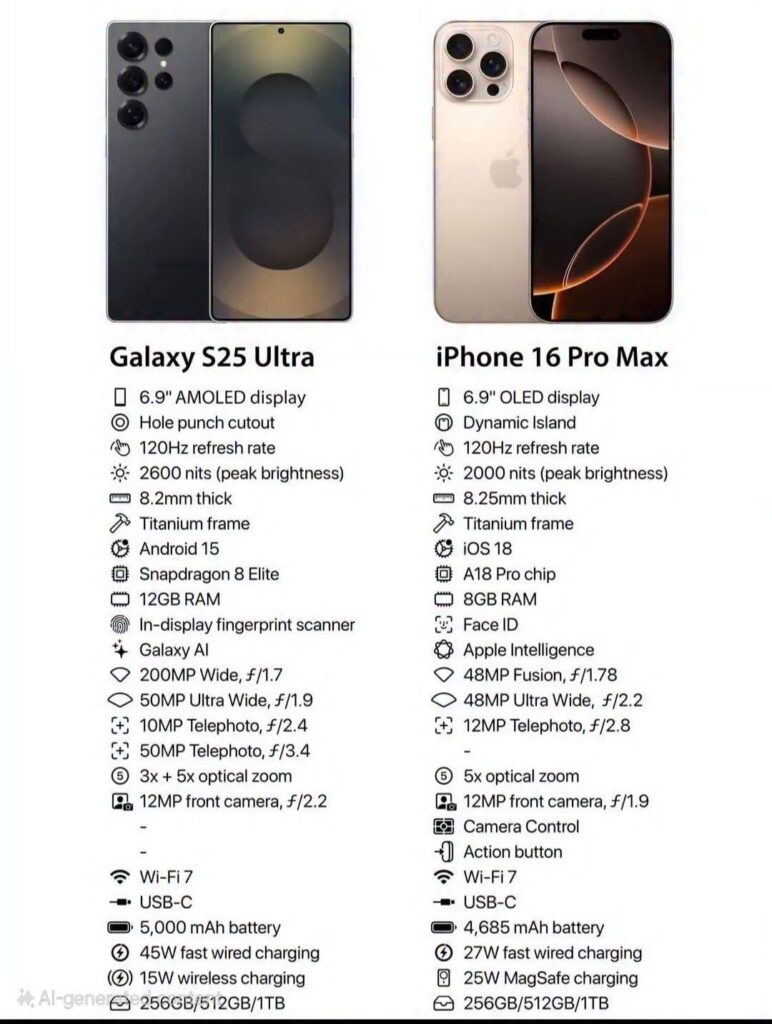
Apple iPhone 17 Pro: Apple maintains its premium aluminum and glass design, now with a more refined flat-edge design and thinner bezels. Rumors say the Pro models might even switch to a titanium frame for extra durability and weight reduction.
Samsung Galaxy S25 Ultra: Samsung’s S25 Ultra comes with a curved-edge AMOLED display, an embedded S-Pen, and an even slimmer profile. It offers more screen real estate, perfect for productivity enthusiasts.
🏆 Winner (Design): Samsung for its versatility and modern aesthetics.
Performance
Apple has introduced the A19 Bionic chip in its iPhone 17 series — focusing on AI performance, battery efficiency, and graphics rendering. It’s built on a 3nm architecture.
Samsung, on the other hand, is powered by the Snapdragon 8 Gen 4 (US version) or Exynos 2500 (global version). While powerful, Apple’s chips still tend to outperform in raw benchmarks.
🏆 Winner (Performance): Apple — unmatched speed, optimization, and battery efficiency.
Camera
iPhone 17 Pro introduces a 48MP main sensor, with next-gen computational photography features and periscope zoom up to 10x. New AI-powered photo tools give it a slight edge in post-processing.
Galaxy S25 Ultra has a 200MP main sensor, with 8K video, 100x digital zoom, and unmatched flexibility. Night photography and zoom quality are Samsung’s key strengths.
🏆 Winner (Camera): Samsung for its sheer hardware superiority and zoom capabilities.
Battery Life & Charging
Apple still limits fast charging (rumored 35W max) and doesn’t include a charger in the box. However, its battery management via iOS is extremely efficient.
Samsung supports 65W fast charging, wireless charging, and reverse charging.
🏆 Winner (Battery & Charging): Samsung
2. Ecosystem: Apple vs Samsung
Apple’s Ecosystem: The Power of the Walled Garden
Apple has built a reputation for crafting a tightly-knit digital ecosystem where its devices—like the iPhone, iPad, Mac, Apple Watch, and Apple TV—work together in perfect harmony. This synergy is a defining trait of the Apple experience.
Effortless Device Syncing:
Apple’s ecosystem thrives on seamless interconnectivity. Whether you’re copying text on your iPhone and pasting it on your Mac with Universal Clipboard, or using Handoff to move from composing an email on your phone to finishing it on your MacBook, the transitions are incredibly fluid and intuitive.
Privacy at Its Core:
Apple has long positioned itself as a champion of user privacy. With advanced features such as Face ID, Touch ID, end-to-end encryption, and a rigorous App Store approval process, users benefit from a highly secure environment. It’s not just about using the device—it’s about trusting it.
Exclusive Services and Features:
Apple delivers a range of premium, integrated services including iCloud, Apple Music, Apple Arcade, and Apple Fitness+. These services are woven directly into the operating system, enhancing the user experience and encouraging long-term engagement.
Long-Term Software Support:
Another area where Apple shines is in software longevity. Devices receive iOS and macOS updates for several years, often far longer than competitors. This keeps older devices relevant and secure, adding long-term value for users.
While Apple’s tightly controlled environment is sometimes criticized for being restrictive—a concept often referred to as the “walled garden”—it results in a secure, polished, and reliable user experience that keeps users loyal to the brand for years.
Samsung’s Ecosystem: The Open Field Advantage
Samsung has carved out its own space in the tech world by creating an ecosystem that embraces flexibility and openness. While integration is strong across Galaxy products, Samsung also plays well with a wide variety of third-party devices and platforms.
Galaxy Devices Working Together:
Samsung’s Galaxy ecosystem is built for convenience and connectivity. Features like Call & Message Continuity and Auto Switch between Galaxy Buds Pro and Galaxy phones or tablets ensure a fluid user experience. Whether you’re switching audio devices or picking up a text conversation on a different screen, it just works.
SmartThings as the Smart Home Hub:
Unlike Apple’s more closed environment, Samsung’s SmartThings platform acts as a universal connector. It supports a massive range of smart home devices, from brands like Google, Amazon, Philips Hue, and more. This makes Samsung an ideal hub for smart living across multiple ecosystems.
Choice and Customization:
Samsung excels in offering variety. From budget-friendly smartphones to premium flagships and foldables, there’s a Galaxy device for every kind of user. Samsung’s Android foundation means more freedom to personalize devices, change launchers, install third-party apps, and tailor the experience to individual needs.
Performance and Productivity:
With cutting-edge processors, high-refresh-rate displays, and features like DeX Mode and the S Pen on Galaxy Ultra models, Samsung is a go-to brand for users who want a powerhouse device for gaming, creativity, and multitasking.
Samsung’s ecosystem embraces openness and cross-platform compatibility, offering a more customizable experience. For users who prioritize choice, flexibility, and smart home integration, Samsung delivers a robust and versatile digital environment.
🏆 Winner (Ecosystem): Apple
3. Software & Updates (Apple Vs Samsung)
iOS 18 focuses on AI integration (Apple Intelligence), on-device Siri improvements, and privacy-focused features. Apple guarantees 5–6 years of updates for all supported devices.
Samsung One UI 7 is cleaner than ever and integrates Google’s AI (Gemini) across the device. It also offers 7 years of updates now (matching Apple).
🏆 Winner (Software): Tie — both offer smooth, long-term software experiences.
4. Innovation & Emerging Tech
Apple is slightly behind in foldables (rumored iPhone Flip still under development), while Samsung leads the segment with the Galaxy Z Fold6 and Z Flip6.
Apple is ahead in AR/VR with the Vision Pro, targeting the mixed reality space. Samsung, though, has plans to re-enter this space in partnership with Google.
🏆 Winner (Innovation): Samsung (Phones), Apple (Mixed Reality)

ZEALOT-S56 Bluetooth Speaker 40W Output Power Bluetooth Speaker with Excellent Bass Performace IPX6 Waterproof Camping Outdoor
- Excellent Bass Performance
- IPX6 Waterproof
- 40W Output Power
- 3D Surround Sound Mode
5. Consumer Preference and Brand Loyalty
When it comes to deciding between Apple and Samsung, the debate goes far deeper than comparing hardware specs or benchmark scores. The real differentiator lies in how each brand resonates emotionally with its users, and the distinct values they represent.
Why Apple Continues to Win Hearts
For many iPhone users, it’s not just about owning a phone—it’s about being part of a well-oiled, premium digital ecosystem. Apple fans often highlight the clean, intuitive iOS interface, robust security features, and the company’s reputation for polished, high-quality hardware. The seamless sync between Apple devices—whether it’s texting from your Mac or answering calls on your iPad—creates a cohesive experience that few ecosystems can match.
Moreover, Apple has built a strong identity as a luxury brand. Owning an iPhone is often associated with status and prestige, particularly in Western markets. While reports in 2025 indicate a modest dip in iPhone loyalty—from a record high of 94% in 2023 to 89% this year—it still reflects an incredibly strong and loyal user base.
Why Samsung Continues to Gain Ground
Samsung, on the other hand, attracts users with its bold innovation and flexibility. As a leading player in the Android world, Samsung offers something for everyone—flagship models for power users, budget-friendly options for value seekers, and groundbreaking devices like foldables and Ultra cameras for tech enthusiasts.
Customization is another major draw. Samsung users enjoy more freedom to tweak their experience, install third-party apps, and use devices in creative ways. Its SmartThings platform also supports a wider range of smart home products, making it a great choice for users who want a more open and connected environment.
According to recent data, Samsung’s brand loyalty has been on the rise, increasing from 68% in 2021 to 76% in 2025—a sign that more users are not only trying Samsung devices but sticking with them long-term.
6. AI Integration — Apple Vs Samsung
Both companies have made significant investments in artificial intelligence, with Samsung’s Galaxy AI and Apple’s Apple Intelligence providing functionalities such as AI-enhanced photo editing, voice assistance, and language translation.

7. Pricing Strategy (Apple Vs Samsung)
In the U.S., Apple prices tend to be consistent across carriers and retailers. The iPhone 17 Pro starts at $999, while Samsung’s S25 Ultra starts at $1199, often with generous trade-in offers.
However, Samsung is known for faster price drops and frequent promotions.
🏆 Winner (Value): Samsung — if you’re okay with Android.
Final Thoughts: It’s Not About Who Wins
At the heart of the Apple vs Samsung rivalry is a simple truth: both brands are excelling, just in different ways.
Go with Apple if you value a polished, user-friendly ecosystem with top-tier security, seamless device integration, and a strong sense of brand consistency. You’re likely someone who appreciates long-term software support, privacy, and the premium design Apple consistently delivers.
Go with Samsung if you’re drawn to innovation, customization, and choice. Whether you want a foldable phone, top-tier mobile photography, or simply more control over your device experience, Samsung offers a flexible and forward-thinking approach to mobile tech.
The choice between Apple vs Samsung ultimately comes down to personal needs and preferences. If you’re looking for a seamless ecosystem, intuitive interface, and strong security, Apple might be the better fit. On the other hand, if you prefer more customization, a wider variety of hardware options, and advanced camera features, Samsung could be the ideal choice. In the Apple vs Samsung battle, both brands offer top-tier flagship phones with impressive performance, so the best pick really depends on what matters most to you. When comparing Apple vs Samsung, there’s no one-size-fits-all answer—just the right phone for your lifestyle.
FAQs
Samsung demonstrates exceptional proficiency in artificial intelligence and generative AI, delivering enhanced support, performance, and comprehensive capabilities. Nevertheless, iPhones feature a ‘liquid retina display,’ which provides marginally improved fluidity in comparison to Samsung devices. Furthermore, the ecosystem that Apple has cultivated around its products is more advanced.
Apple has surpassed Samsung to claim the title of the leading smartphone brand worldwide, as per recent data from Counterpoint Research.
In the initial quarter of 2025, the smartphone market experienced a growth of 3% in comparison to the previous year.
Apple: US-based phone maker Apple took the top spot by shipping 70 million smartphone units.
Samsung: As a major competitor, Samsung took the second spot by shipping 58.3 million smartphones