

When you search “Google nano banana,” don’t expect fruit. In the context of AI, nano banana refers to the Gemini 2.5 Flash Image model—an innovative image-generation and editing engine by Google DeepMind. Paired with the reasoning-powered Gemini 2.5 family, this duo is redefining how we create and manipulate images with AI.
Table of Contents
Toggle1. What Is Gemini 2.5?
Google’s most recent generation of multimodal AI models, known as Gemini 2.5, includes versions including 2.5 Pro, 2.5 Flash, and 2.5 Flash-Lite. These models can interact with complex stimuli using innate reasoning skills since they can process text, graphics, music, video, and even PDFs. (Gemini 2.5 Pro was even demonstrated to outperform rivals in benchmark tests.)
2. Meet Google nano banana — Not a Fruit, But a Feature
Gemini 2.5 Flash Image, a powerful image-editing tool inside the Gemini software, has the amusing internal moniker “Google nano banana.” Since its August 2025 launch, it has drawn notice for its innovative image editing, blending, and transformation capabilities, with results frequently going viral.
3. What Makes nano banana Stand Out?
- Prompt-driven image modification: Utilize natural language to execute specific alterations (e.g., “render background ethereal,” “position subject within a classic automobile”).
- Multi-image integration: Effortlessly merge multiple inputs into one cohesive image.
- Character uniformity: Preserves the subject’s look throughout modifications, perfect for narrative or branding purposes.
- Contextual awareness: Edits leverage context-sensitive intelligence, such as situating objects in appropriate environments.
- Invisible watermarking: Every output features SynthID digital watermarks to identify AI-generated images.

4. Going Viral — Impact on Gemini App Growth
Individuals started transforming selfies into delightful 3D figurines—choosing appealing designs that resembled miniature statues. This unique trend surged across platforms such as X and Instagram, inspiring user-driven creativity.
Both experts and users reflected on its impactful, occasionally disconcerting, editing realism.
Google disclosed that nano banana played a role in attracting over 10 million new users to the Gemini app and handled more than 200 million image edits within just a few weeks—an impressive increase in engagement.
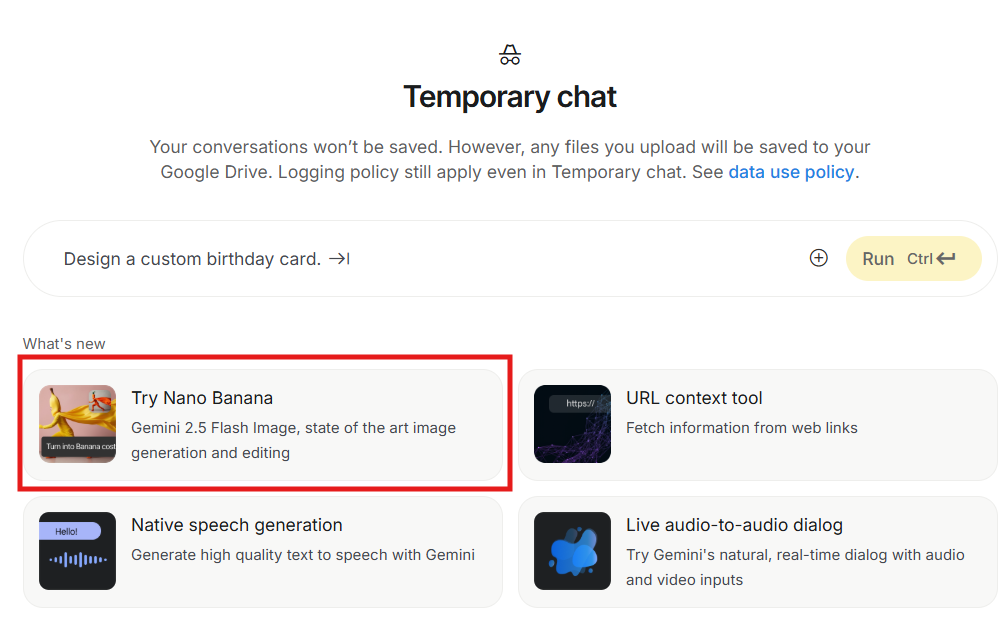
5. How It Works — Step-by-Step with nano banana
Open the Gemini app or Google AI Studio.
Choose Gemini 2.5 Flash Image (Try Nano Banana).
Upload your photo, then enter a creative prompt.
Watch it transform into surreal scenes, figurines, or stylized pieces.
6. What Users Are Saying
Its remarkable ability to modify pre-existing photographs so flawlessly that the final product “can’t be trusted” was mentioned by FastCompany.
“It’s insanely good… it excels at editing existing images,” a Medium critic wrote.
7. Behind the Scenes — Naming and Evolution
Due to viral hype, “nano banana,” which was originally a humorous placeholder, was adopted as the Gemini 2.5 Flash Image’s public moniker. The moniker persists in online discourse even though Google stresses its actual term in documentation.
Final Thoughts
Gemini 2.5 and its quirky counterpart, Google nano banana, mark a new frontier in AI creativity. By blending deep reasoning, multimodal capabilities, and intuitive editing tools, these models are making imaginative transformations accessible to everyone. From crafting 3D-style figurines to building interactive visuals, the only limit is your prompt.
If you haven’t tried nano banana yet, hop into the Gemini app and get ready to reimagine reality—one prompt at a time.
FAQs
No—nano banana refers to Google’s AI image-editing model (Gemini 2.5 Flash Image), not anything edible.
A family of reasoning-enabled, multimodal AI models by Google DeepMind, including Pro, Flash, and Flash-Lite.
It edits images from prompts, fuses multiple images, preserves character consistency, leverages world knowledge, and applies invisible watermarks.